
Maxon Autograph Motion Test — The Boys Inspired Fan Trailer
A personal motion design experiment created as my first test with Maxon Autograph, using an unofficial The Boys-inspired trailer concept to explore character reveals, compositing, atmosphere, animated backgrounds, music timing, and dramatic visual effects.
With Maxon making Autograph freely available, I wanted to test the software through a small but visually engaging project that would give me a practical feel for its motion graphics, compositing, and video-building workflow.
Rather than creating a simple abstract test, I built a short fan-style trailer inspired by The Boys. The project gave me a chance to explore how Autograph handles layered image assets, animated titles, atmospheric effects, timing, transitions, and a more cinematic build-up.
The character artwork and background image were generated using ChatGPT, then brought into Autograph for layout, animation, compositing, and sequencing. The idea was to create a dramatic character-reveal structure, introducing the cast one by one against a devastated city backdrop, while gradually increasing the intensity of the visuals.
To add more depth and atmosphere, I layered subtle particles, smoke, and movement into the background. The environment also transforms throughout the video, helping the piece feel less static and giving the sequence a more dynamic, trailer-like quality.
The video builds towards Homelander as the central visual climax. His eyes gradually light up red before releasing laser beams across the frame, filling the screen with energy and creating a natural transition into the final Prime Video logo cut.
This was primarily a workflow and creative test, but it also became a useful exercise in pacing, visual hierarchy, sound-driven editing, and building atmosphere from still images.
My Process
The project began with the creation of the main character artwork and destroyed city background using ChatGPT. These images formed the visual base of the trailer, but they still needed preparation before they could be used effectively inside a motion design workflow.
The generated images were upscaled using Affinity Photo to improve their resolution and overall quality. For the character assets, I removed the backgrounds to create transparent PNG files, allowing each character to be animated, layered, and composited independently within Maxon Autograph.
After closer inspection, some minor manual cleanup was needed around the character edges. This helped refine the silhouettes and avoid unwanted artefacts once the characters were placed over the animated background and moving atmospheric effects.
One of the character images also required a more specific edit. The original Butcher image showed him smoking a cigarette and holding a knife, which did not quite fit the direction I wanted for the trailer. I used AI to remove the cigarette and replace the knife with a Compound V vial, making the image feel more relevant to The Boys universe while also working better within the sequence.
Once the image assets were prepared, I brought everything into Maxon Autograph to build the video. The sequence was structured around dramatic character reveals, animated titles, atmospheric background movement, smoke, particles, and music-driven timing.
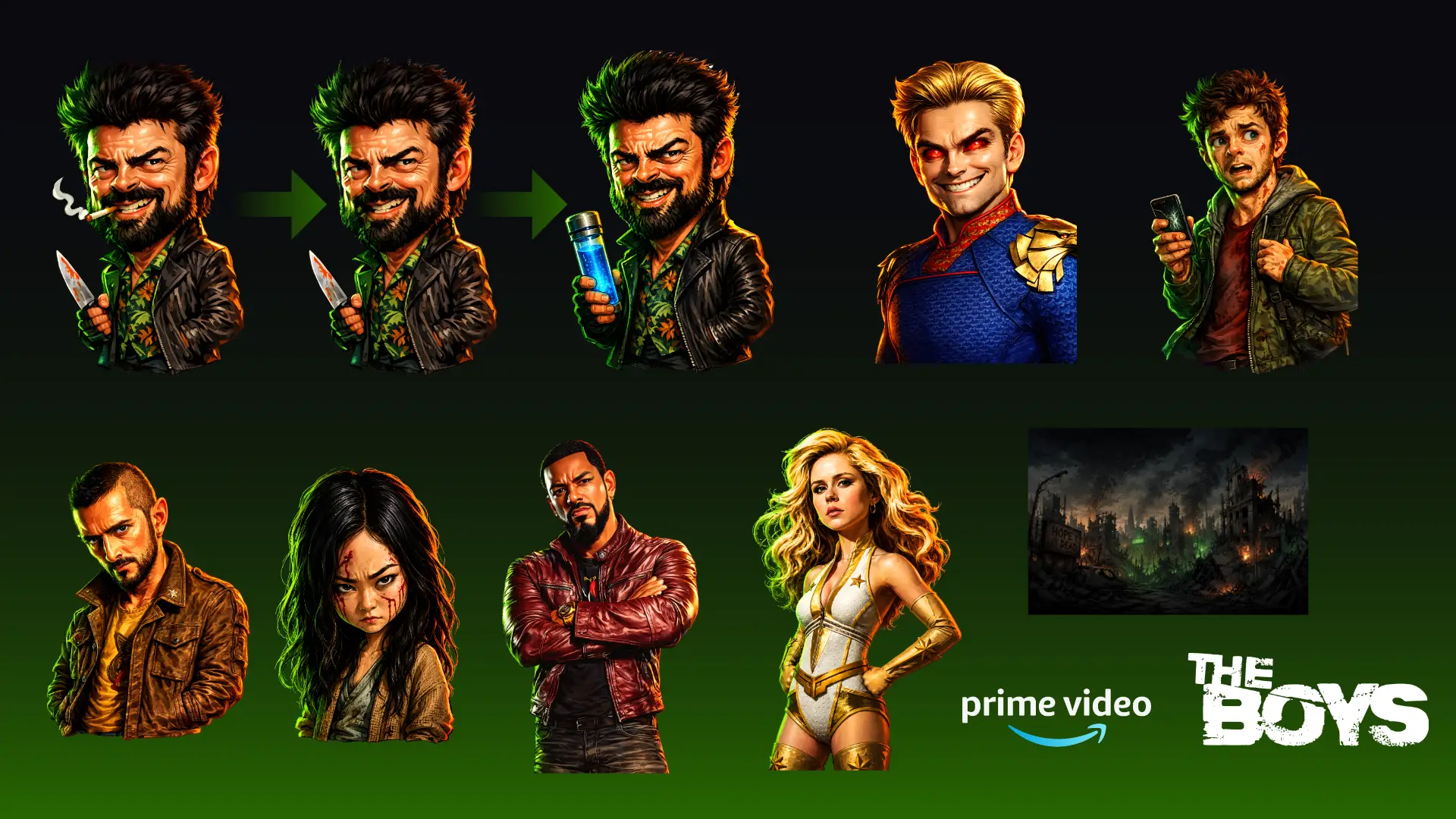
The background image was also animated and transformed throughout the video to prevent the scene from feeling static. This added a greater sense of depth and progression, helping the trailer build momentum as each character appeared.
The final section focuses on Homelander as the visual climax. His eyes gradually light up red before the laser effect expands across the frame, eventually filling the video and creating a dramatic transition into the final Prime Video logo cut.
Asset Preparation
A key part of the project was preparing the AI-generated artwork for motion design use. The images were not used exactly as generated; they were upscaled, cut out, cleaned up, and in some cases adjusted to better support the concept.
This included creating transparent character PNGs, refining edges, improving image quality, and making small creative changes where needed. These steps helped bridge the gap between AI image generation and a more polished compositing workflow.
Outcome
The final video is a short, punchy motion design test that helped me explore Autograph’s potential as a creative video and compositing tool. It also demonstrates how AI-generated imagery can be taken beyond the initial output through upscaling, cleanup, transparent asset preparation, compositing, animation, and visual effects.
As a first use case, the project gave me a useful hands-on comparison point against other video creation and editing tools, while also showing how quickly a still-image concept can be developed into a stylised trailer sequence with atmosphere, pacing, and a cinematic finish.